The Future of Virtual Autopsy: What the Next Decade Could Look Like
Summary
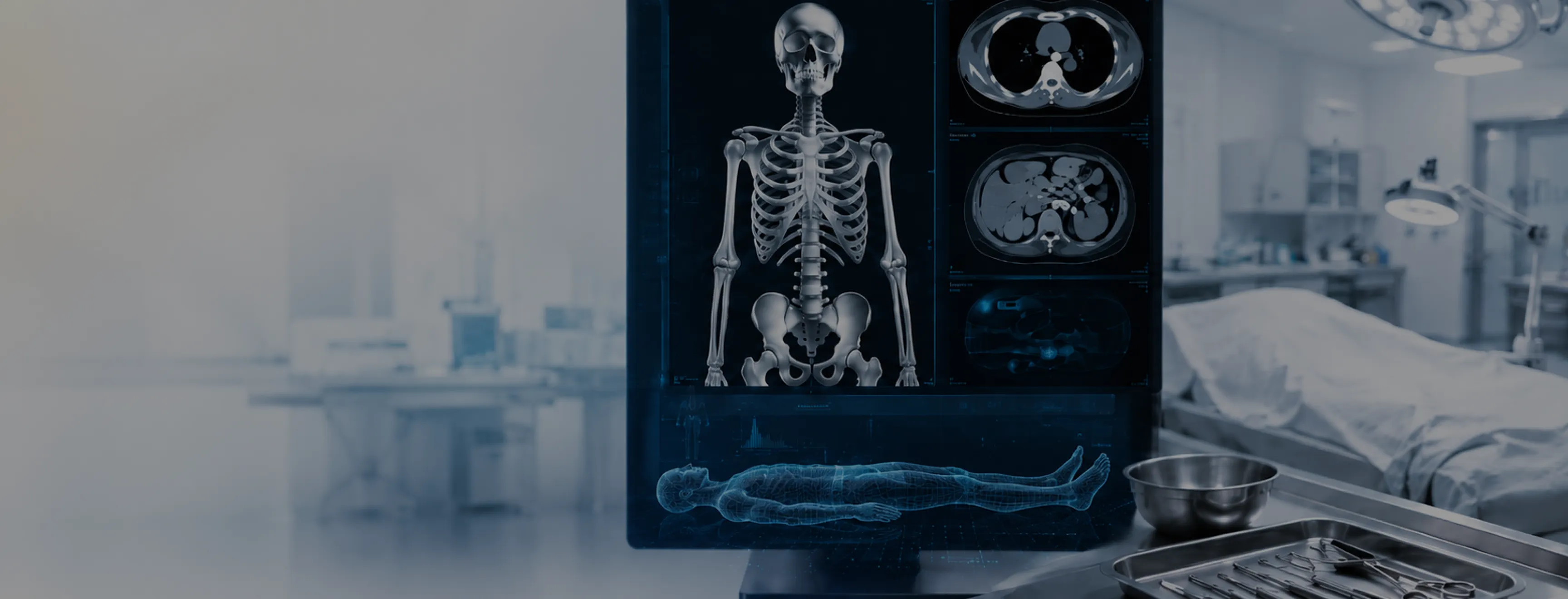
The future of virtual autopsy may be shaped by more than better imaging. Over the next decade, connected digital evidence, improved visualisation, AI-assisted analysis, education and stronger forensic workflows could change how post-mortem investigations are conducted, reviewed and learned from.
The next decade may change what we expect from an autopsy
The future of virtual autopsy is often discussed in terms of better scanners, sharper images and artificial intelligence. These developments will certainly matter. But the more interesting change may be in what happens around the image.
As post-mortem imaging becomes more sophisticated, forensic institutions will have an opportunity to preserve findings digitally, revisit cases, collaborate across disciplines and use real case material for education and research. In this article, we look at six developments that could shape virtual autopsy over the coming decade, and what institutions may need to consider as the field evolves.
1. The forensic image could become a permanent part of the case
One of the most important characteristics of post-mortem CT is easy to overlook. The examination produces a digital record. Unlike observations that exist primarily at the time of examination, imaging data can potentially be stored, reviewed and analysed again. Measurements can be repeated. A different specialist can examine the same dataset. New questions can be explored without recreating the original examination.
This already has practical relevance. INTERPOL's guidance on Disaster Victim Identification recognises post-mortem imaging, including CT, as important in establishing cause and manner of death and recording identifying features that can be compared with ante-mortem information. Over time, this could make the forensic record much richer. The value of an examination would extend beyond what can be concluded on the day it is performed.
That longer life of forensic information also raises an important question: what happens to evidence once the original examination is over? We explore this further in “What Happens to Evidence After an Autopsy? Why Digital Preservation Matters”.
2. Better imaging could reveal details that are difficult to see today
Virtual autopsy technology will continue to benefit from broader developments in medical imaging. A 2024 paper from the University of Zurich examined the potential of photon-counting CT in forensic death investigations. The technology offers improved spatial and contrast resolution and better material differentiation, with potential applications in areas such as trauma analysis, bone examination and high-resolution virtual autopsy.
Other imaging modalities are also likely to become increasingly complementary. Current research points to different strengths across PMCT, post-mortem CT angiography and post-mortem MRI, depending on whether the examination involves bone, vascular structures or soft tissue. The next generation of virtual autopsy centres may therefore need to think beyond acquiring a scanner. Imaging protocols, interpretation expertise, software, storage and specialist collaboration will increasingly determine how useful that technology becomes.
3. AI in virtual autopsy may become a second pair of eyes
AI is likely to become part of forensic imaging, but its most useful role may be practical. Large imaging datasets take time and expertise to examine. In the future, AI-assisted systems could help specialists identify areas requiring closer attention, compare patterns across cases, support measurements or organise large volumes of imaging information.
The important word is “support”.
Recent reviews of virtual autopsy continue to identify limitations in post-mortem imaging, including soft-tissue interpretation, tissue sampling and distinguishing certain ante-mortem and post-mortem changes. That makes human expertise central to how AI in virtual autopsy develops. Algorithms may become increasingly capable of helping specialists navigate information, but forensic conclusions carry medical, investigative and legal consequences.
For institutions, therefore, the more useful question may not be “When will AI conduct an autopsy?” It may be “Where can AI make a trained forensic professional more informed, consistent and efficient?”
4. Cases may become easier to discuss across disciplines
A forensic investigation can involve forensic medicine specialists, radiologists, investigating officers and, depending on the case, several other experts. Digital imaging creates a common visual reference for these conversations. Advances in 3D post-processing are already improving the interpretation and communication of post-mortem CT. Research published in 2025 notes applications in lesion analysis, autopsy planning, forensic reporting and presentation of findings.
Over the next decade, better visualisation and secure digital access could make multidisciplinary review easier. A finding would no longer have to be understood only through a written description. Relevant specialists could examine the underlying imaging and discuss it from their respective perspectives. This could be particularly valuable in complex cases where different disciplines need to arrive at a shared understanding of the evidence.
5. Yesterday's case could help train tomorrow's forensic specialist
Another possibility deserves greater attention. When forensic examinations are digitally preserved, carefully anonymised cases can potentially contribute to teaching and research. A rare injury pattern, an unusual anatomical finding or a particularly instructive case does not have to disappear from the educational environment once the investigation is complete.
Over time, institutions could build structured libraries of forensic imaging cases that allow students and professionals to:
study real anatomical and forensic findings;
compare different injury patterns;
revisit complex cases during training;
practise interpretation in a controlled environment; and
support research using appropriately governed datasets.
This is where the future of virtual autopsy starts connecting investigation with education. Medical colleges that invest in the field may therefore be building more than a forensic examination capability. They may also be creating a long-term knowledge resource.
This has implications for how forensic medicine itself is taught. In “Why Medical Colleges Should Teach Virtual Autopsy Today”, we look more closely at how exposure to modern forensic imaging can prepare students for the changing practice of forensic medicine.
Why Medical Colleges Should Teach Virtual Autopsy Today
Explore how exposure to modern forensic imaging prepares students for the changing practice of forensic medicine.
EXPLORE MORE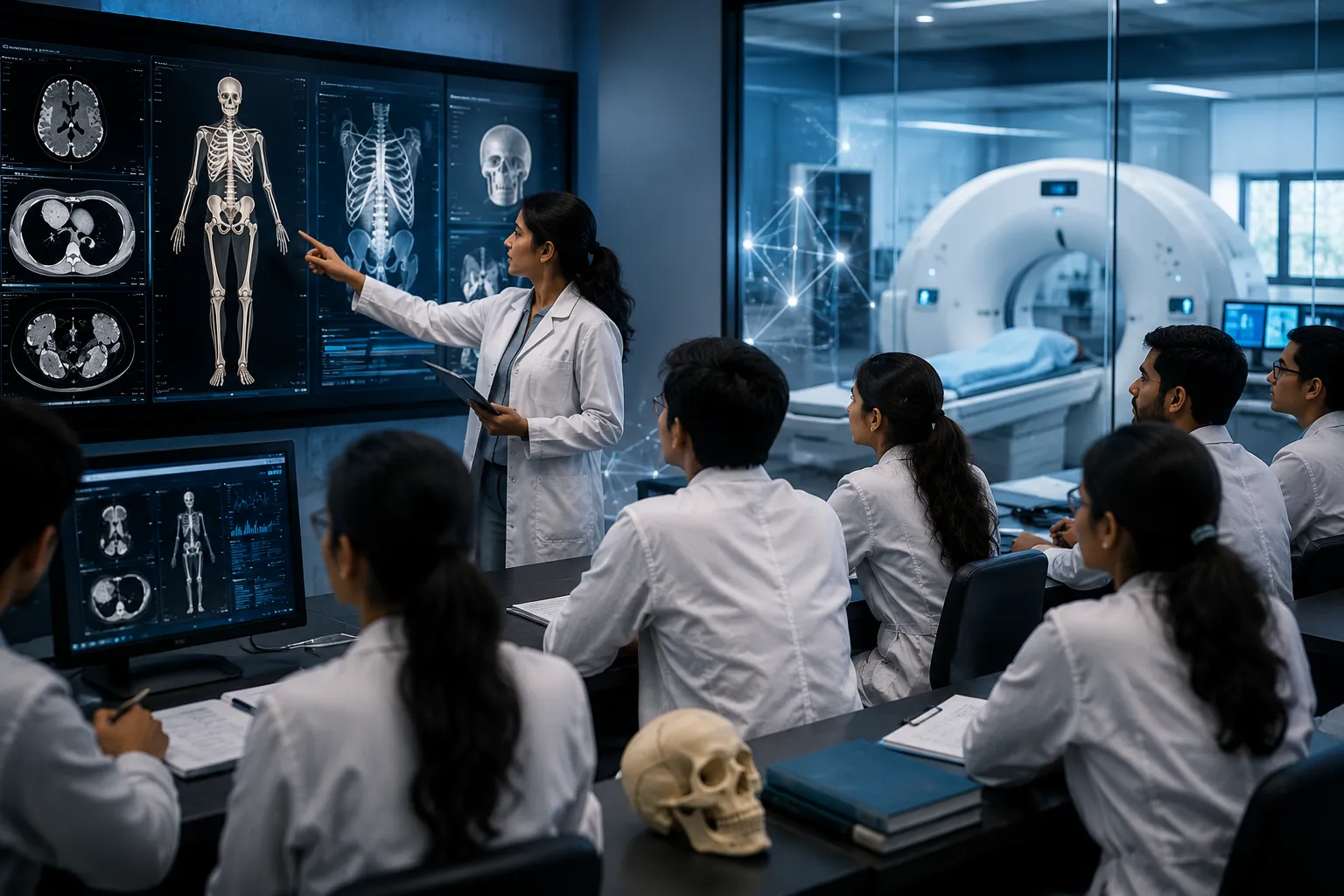
6. The real shift could be from equipment to ecosystems
As we work around virtual autopsy and forensic infrastructure, one pattern becomes increasingly apparent. The value of technology depends heavily on what surrounds it. A CT scanner can produce images. A stronger forensic ecosystem has to consider how those images are examined, interpreted, stored, retrieved, taught from and connected with the wider investigation.
That requires institutions to think about several elements together:
imaging infrastructure and protocols;
forensic examination and reporting workflows;
secure digital evidence preservation;
specialist training and continuing education;
multidisciplinary collaboration;
research and case-based learning; and
governance around access, privacy and responsible technology use.
This philosophy also shapes how we think about SEVA Technologies. We see virtual autopsy as part of a wider evolution in forensic care, bringing together imaging, digital workflows, education and research rather than treating each as a separate intervention. For India, where forensic capacity will need to serve a large and diverse population, building these connections may ultimately matter as much as adopting individual technologies.
The future of virtual autopsy will depend on what we build around it
The future of virtual autopsy could bring sharper imaging, better visualisation and increasingly capable AI. Its larger contribution, however, may come from making forensic knowledge more preservable, reviewable, collaborative and useful for education.
The next decade will therefore require more than technology adoption. It will require institutions to build the expertise, workflows, governance and enterprise readiness needed to use that technology responsibly. That is how virtual autopsy can mature from an emerging capability into a meaningful part of future forensic infrastructure.
To understand how an integrated virtual autopsy ecosystem can support examination, education and future-ready forensic infrastructure, explore SEVA Technologies' Virtual Autopsy solutions or speak with our team.
Exploring how the future of virtual autopsy could fit into your institution's forensic infrastructure?
Talk to SEVA Technologies about building an integrated, future-ready forensic ecosystem.
FAQs
The future of virtual autopsy is likely to involve higher-resolution medical imaging, better visualisation, digitally preserved evidence, AI-assisted analysis and stronger integration with education and research. Its development will also depend on trained professionals, appropriate protocols and reliable digital infrastructure rather than advances in imaging technology alone.
Current evidence does not support viewing virtual autopsy as a universal replacement for conventional autopsy. Post-mortem imaging performs particularly well in certain areas, while limitations remain in areas such as tissue sampling and some soft-tissue findings. Future forensic practice will therefore likely use different methods depending on the requirements of each case.
AI in virtual autopsy could potentially assist specialists with image analysis, measurements, pattern recognition, case comparison and prioritisation of findings for closer examination. Its most responsible role is likely to be decision support, with qualified forensic and imaging professionals continuing to interpret findings within the wider medical and investigative context.
Developments in CT, MRI, photon-counting CT, advanced image reconstruction, 3D visualisation, AI-assisted analysis and digital evidence management could all influence virtual autopsy technology. Equally important are systems that allow imaging data to be securely preserved, retrieved, reviewed, and used appropriately across investigation, education, and research.
Digital preservation keeps post-mortem imaging available after the original examination. This means authorised specialists may be able to revisit findings, repeat measurements, seek another opinion or examine the information in light of new investigative questions. Proper governance, secure storage and clear evidence-management procedures are essential to maintaining its forensic value.
With appropriate anonymisation and governance, digitally preserved forensic imaging can create valuable case-based learning resources. Students and professionals can study anatomy, injuries and forensic findings using actual imaging data and revisit complex cases repeatedly. Over time, institutional case libraries could also contribute to specialist training and forensic research.
Institutions should look beyond the imaging equipment itself. They need to consider clinical and forensic expertise, examination protocols, reporting, digital storage, evidence security, training, interdisciplinary collaboration, maintenance and long-term use of the data. A well-designed virtual autopsy programme is therefore better approached as an ecosystem than as a standalone technology purchase.